
PGR sees July as the limit to avoid electoral context in Vorcaro’s accusation

The Attorney General’s Office (PGR) assesses that the month of July serves as a reasonable deadline for negotiations on Daniel Vorcaro’s plea bargain to be concluded without ‘contamination’ of the electoral context and should resume talks with the banker’s defense.
Members of the PGR consider that it would be unrealistic to imagine that the negotiation with Vorcaro, identified as the alleged leader of a criminal organization that generated billion-dollar fraud, would be resolved in the short term and at the first proposal.
There is a view that it is natural to demand more information from the former banker and that the back and forth between authorities and defense is natural to negotiation. A first version was rejected by the Federal Police, which also participated in the negotiations.
According to columnist Malu Gaspar, from GLOBO, a conversation between members of the PGR and Vorcaro’s lawyer, Sérgio Leonardo, should take place in the coming days, marking the resumption of negotiations after the setback. The defender was already part of the team of the owner of Banco Master and took charge of the case after the departure of lawyer José Luis Oliveira Lima, known as Juca.
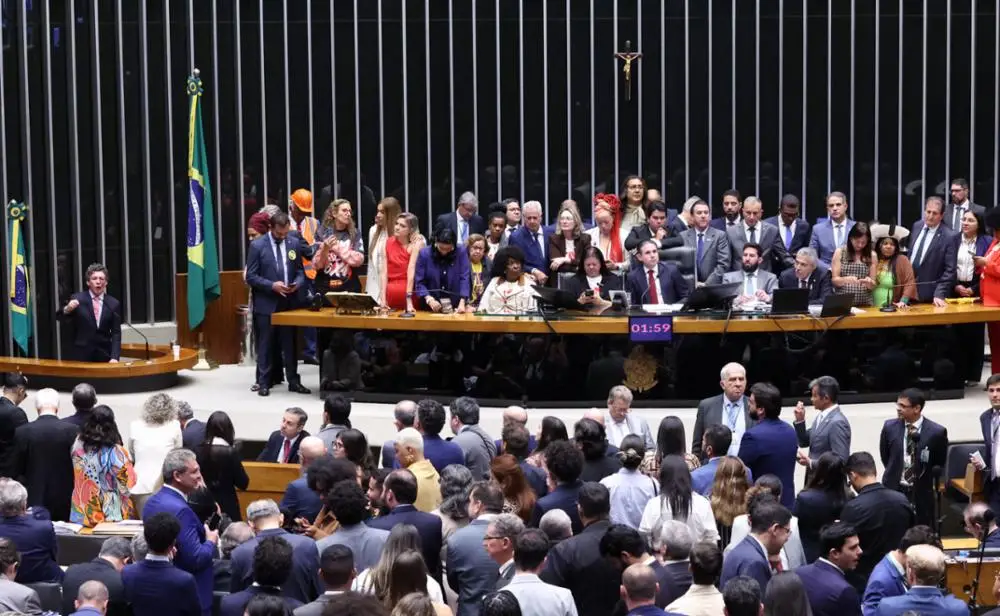
Who voted against the PEC to end the 6×1, which reduces the working day to 40 hours
Despite the bench’s orientation to support the PEC, six deputies from the Liberal Party presented a dissenting vote
There has already been a sign of some dissatisfaction, on the part of the PGR, with what has been delivered so far by the banker. Now, it is necessary to wait for what else will be offered by the Master’s owner’s defense.
Amid the continuation of the negotiations, there is a concern, behind the scenes at the PGR, due to discrepancies being pointed out between the information presented by Vorcaro and the data already identified in the Operation Compliance Zero investigation.
In the context of the new attempt to close the agreement, the decision by Minister André Mendonça, of the Federal Supreme Court (STF), to order Vorcaro’s return to the Federal Police General Staff room in Brasília was seen as a signal. Vorcaro’s transfer to a transit cell took place under the argument that the former banker had already submitted his plea bargain proposal and therefore the space that would allow for greater dialogue with the lawyers would no longer be necessary. Thus, the return was seen as an indication of the “second chance” offered to the former banker.
Mendonça’s interlocutors believe that there is no problem with the PGR continuing with negotiations on Vorcaro’s plea bargain, even without the participation of the PF. These same people believe, however, that the ideal is for the Prosecutor’s Office and the Federal Police to have similar assessments of the content presented, given the relevance of the investigations.
The negotiations
The confidentiality agreement with the PF and PGR to begin negotiations was made public on March 19, after the Federal Supreme Court (STF) formed a majority to keep the banker in prison. There is no determination in law regarding the deadline for the annexes to be formalized after the conversations begin.
If the PF and PGR consider that the complaint adds essential elements to the investigation, it will move forward, but for it to be valid in investigations or processes, it still needs to be approved by the Federal Supreme Court (STF). This stage will be the responsibility of Mendonça, rapporteur at the Court.
It is necessary for the content to go beyond what has already been identified in the investigation fronts opened so far, in addition to explaining data that is already known, but about which there are still doubts. Investigators already have files from nine of the banker’s cell phones in their hands, which include around eight thousand files.
The owner of Master is suspected of being at the head of a criminal organization that carried out financial fraud and threatened opponents. The leadership position and the evidence already collected increase the level of demand of what he will need to reveal to obtain the benefits.
Plenary collaboration can be signed by those being investigated or defendants, whether they are in prison or not, in exchange for benefits, such as a reduced sentence, a more lenient regime or, in specific situations, even judicial pardon.
It is up to the Federal Police and the Public Ministry to verify the veracity of the information presented. The employee’s word alone is not enough to support an accusation — it must be confirmed by other evidence.
