
Judge orders Nunes to rename Marginal Tietê and 10 other addresses that pay homage to the dictatorship
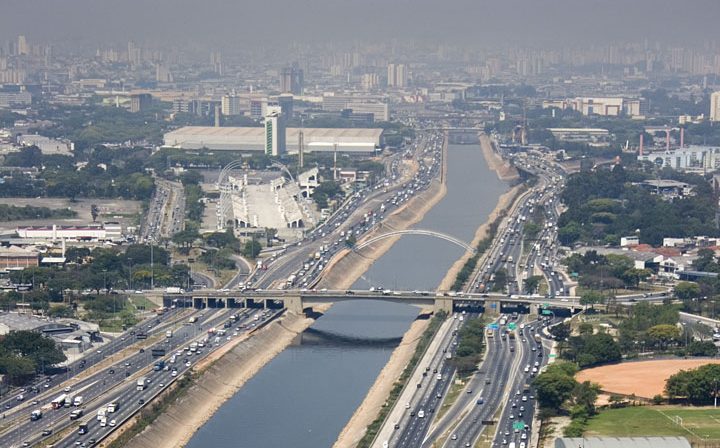
Judge Luis Manuel Fonseca Pires, from the 3rd Public Finance Court of São Paulo, ordered Mayor Ricardo Nunes (MDB) to change the name of eleven roads and public places in the city that pay homage to names from the military dictatorship. The list of streets and spaces that should have their names changed include Marginal Tietê, Ponte das Bandeiras, a sports center in the South zone and the Vila Alpina crematorium – the oldest in the country.
The report seeks contact with the city hall, which had not been achieved until the publication of this text. The space is open for demonstrations.
One of the authors of the request is the Vladimir Herzog Institute – a journalist murdered in October 1975 in Doi-Codi, the torture center of the former Second Army.
ACCESS NOW
Pires assesses that the municipal administration has been “missing”, for more than ten years, by not initiating the renaming of public spaces “in compliance with the right to political memory that is associated with the democratic regime and the dignity of the human person”.
The magistrate ruled that, more than ten years after the enactment of the law allowing the change, the city remains full of roads and equipment whose names are linked to the military dictatorship.
The order gives the municipality 70 days to present a schedule with a view to changing eleven names of roads and public spaces classified as “sensitive cases” that require compliance with rules that provide for changing the name of public places when they refer to “ authority that has committed crimes against humanity or serious human rights violations”.
According to the court decision, the city hall must change the names of the following addresses:
- Vila Alpina municipal crematorium whose name pays homage to a director of the Funerary Service of the Municipality of São Paulo who traveled to Europe to study cremation systems at a time coinciding with the height of practices of forced disappearance and which, according to statements documented in action by the Public Prosecutor’s Office Federal, exhumed bodies were clandestinely buried in the Perus ditch during the same period of the director’s work in the city’s Cemeteries Department;
- Sports Center located on Rua Servidão de São Marcos, South Zone of São Paulo, attributed to the general chief of the Army Information Center (CIE), from November 1969 to March 1974, who led Operation Marajoara in Araguaia;
- Marginal Tietê, North/Center Zone, whose name honors the Marshal of the Army and former president (1964-1967), who was one of the leaders of the 1964 coup d’état and created the National Information Service (SNI), founded political persecution , torture and executions during the dictatorship;
- Ponte das Bandeiras in the North/Center Zone, which pays homage, approved by the City Council in 2017, to the former senator and former director of the Department of Political and Social Order (DOPS), an organ of political repression during the Military Dictatorship;
- Rua Alberi Vieira dos Santos, in the North Zone, which pays homage to a former sergeant of the Military Brigade of Rio Grande do Sul, collaborator of the Army Information Center (CIE), with participation in the massacre in the Iguaçu National Park and in the setting up of ambushes and massacres resistance, illegal detentions, executions, forced disappearance of people and hiding of bodies;
- Rua Dr. Mário Santalucia, in the North Zone. He was part of the Legal Medical Institute and participated in the case of issuing a fraudulent autopsy report;
- Praça Augusto Rademaker Grunewald, in the South Zone, whose name refers to the vice-president between 1969-74, Médici government, the most intense period of repression, censorship and revocation of civil and political rights;
- Rua Délio Jardim de Matos, in the South Zone, which refers to the member of the military cabinet of the Presidency of the Republic of the Castelo Branco government and was one of the main organizers of the movement that promoted the 1964 coup d’état;
- Avenida General Enio Pimentel da Silveira, in the South Zone, named after a soldier who served in the Information Operations Detachment – Internal Defense Operations Center (DOI-CODI) of the 1st Army from April 1972 to June 1974 and participated proven in cases of torture, execution and forced disappearance;
- Rua Dr. Octávio Gonçalves Moreira Júnior, in the West Zone, which was named in honor of a Police Chief involved in cases of torture and concealment of corpses
- Rua Trinta e Um de Março, in the South Zone, which refers to the day of the civil-military coup
In the order, the judge did not reproduce the names of the exponents of the dictatorship who named the streets and public places in São Paulo. The list includes Marshal Castelo Branco, who was honored when Marginal Tietê was named, and former senator Romeu Tuma, former general director of the Department of Political and Social Order (DOPS) whose name ended up being chosen by the City Council, in 2017, to name the Ponte das Bandeiras.
The decision was made in the context of a public civil action filed by the Vladimir Herzog Institute and the Public Defender’s Office of the Union, which requested that the city hall be asked to urgently present a schedule to change the names of roads and public spaces that pay homage to people who committed crimes against humanity or serious human rights violations.
The entities added to the process a report from the Memory and Truth Commission and a former program from the Secretariat of Human Rights and Citizenship, ‘Ruas da Memória’, which mapped 38 places that pay homage, in São Paulo, to people linked to the dictatorship, 22 of them with direct involvement in repression. The document pointed out 17 municipal facilities – 12 schools and five gyms – that perpetuate the tributes.
Judge Luis Manuel Fonseca Pires highlighted in his order the “broad and solid” legal foundation that imposes the recognition of the right to political memory associated with democracy and the Rule of Law.
The judge considered that, despite such a legal structure, the right to political memory in fact has little resonance in public policies. He cited as an example research that, in 2019, showed that 90% of Brazilians said they were unaware of what AI-5 was, “the greatest symbol of the dictatorship that dominated the country for 21 years”.
According to Pires, the right to political memory must be respected and promoted by the State. This must “foster public policies to form a critical awareness of the essentiality of democracy and the uncompromising defense of human dignity”, highlighted Pires.
“The right to political memory ensures society’s awareness of the moments in which power was taken away from it, the times and means by which oppression rose. Understanding the violence of the State and the abuses of public agents constitute an essential right to build democracy, value the dignity of the human person and resist authoritarianism”, he explained.