
Brazil enters the top 10 of the most dangerous countries in a global conflict ranking
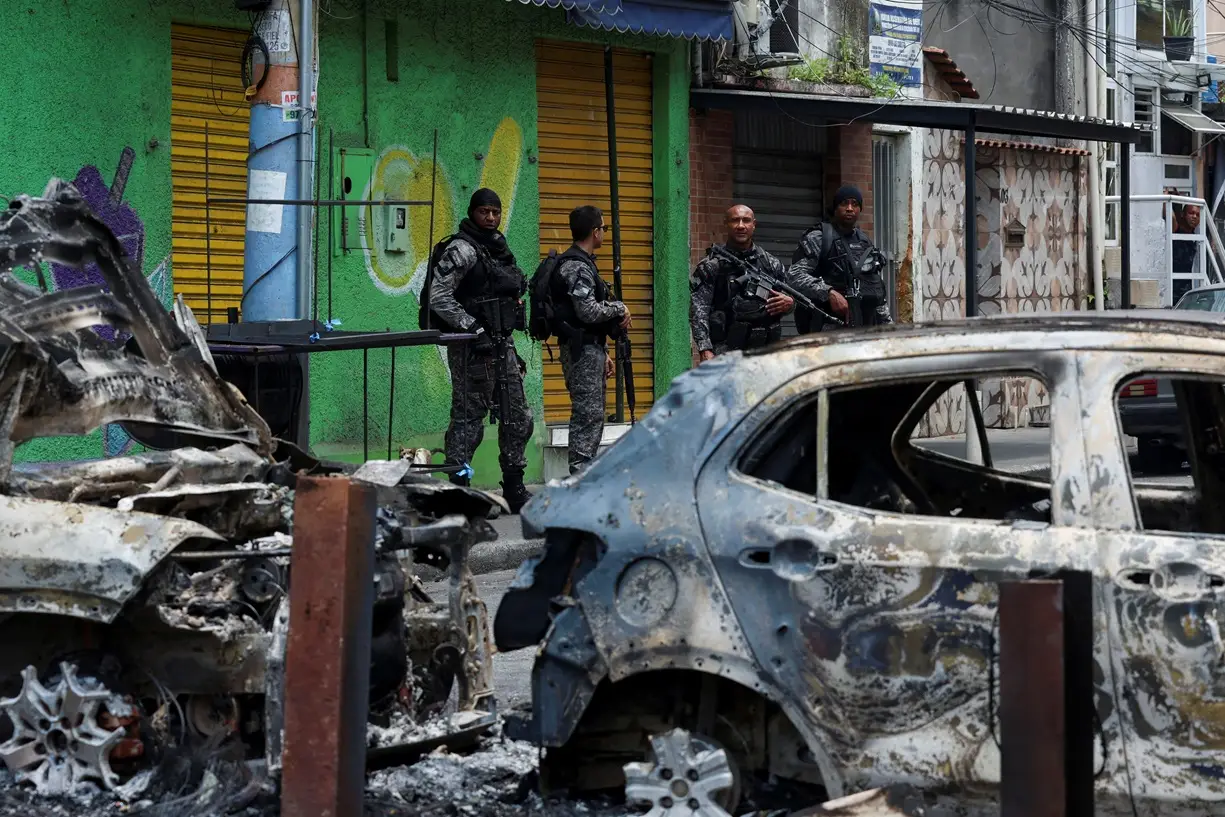
Brazil appears among the ten most dangerous countries in the world in 2025, according to the Global Conflict Index released this Thursday (11) by the non-governmental organization ACLED (Armed Conflict Event Location and Data Project). The country occupies 7th place in the ranking, in a group dominated by nations affected by civil wars, armed conflicts and the strong presence of criminal groups.
The survey evaluates four main criteria: number of deaths, risk posed to the civilian population, territorial extent of conflicts and number of active armed groups.
Lula regains strength among deputies and ties with the opposition as favorite for 2026
Genial/Quaest survey shows improvement in the government’s assessment, division over Bolsonaro’s weight and Congress’s focus on re-election

After Moraes’ decision, Michelle Bolsonaro says Congress is experiencing “dark days”
Former first lady calls Supreme Court decisions arbitrary after immediate loss of deputy’s mandate
Brazil’s presence in the ranking draws attention because it places the country alongside declared war zones, such as Palestine, Myanmar and Syria, which top the list.
ACLED points out that the escalation of violence in Latin America was one of the main vectors of the index in 2025. Mexico, Ecuador, Brazil and Haiti concentrate some of the worst indicators on the continent, driven mainly by the actions of criminal factions, disputes over strategic routes and institutional fragility in certain regions.
Faction violence
In the Brazilian case, the organization highlights the activities of gangs and factions that dispute control of urban territories and crime routes, especially linked to drug and weapons trafficking.
The violence associated with these groups increased the number of deaths and increased the risk for civilians, factors that are central to the country’s position in the ranking.
ACLED cites large-scale police operations and armed clashes as evidence of the degree of internal conflict. One of the episodes mentioned is the operation carried out in October in Rio de Janeiro against the Comando Vermelho, which resulted in more than 121 deaths, illustrating the level of lethality associated with the dispute between factions and security forces.
Although Brazil has fallen one position compared to 2024, the report points out that the country continues to have a high level of organized violence, with conflicts concentrated in large urban centers, but with national repercussions.
Mexico and Ecuador lead
The Brazilian situation is part of a broader regional context. Mexico occupies 4th place in the global ranking, maintaining the same position as the previous year. According to ACLED, violence in the country was driven by the internal war in the Sinaloa Cartel after the arrest of Ismael “El Mayo” Zambada, in July 2024, in addition to the significant increase in attacks against politicians and public agents. In 2025 alone, around 360 episodes of this type were recorded.
Ecuador appears in 6th position, after rising 36 places in a single year. The country is facing an explosion of violence linked to the dispute between factions such as Los Lobos and Los Choneros, the fragmentation of criminal groups after the arrest or death of leaders and the increasingly central role of Ecuadorian territory in regional and international drug trafficking. ACLED estimates that more than 3,600 people have died in gang-related incidents this year.
Haiti completes the picture
Haiti, which occupies 8th position, faces an even more critical scenario of political instability. Since the assassination of President Jovenel Moïse, in 2021, gangs have come to control large areas, especially in Port-au-Prince, and have been expanding their operations to other regions.
In response, the UN Security Council approved the creation of a multinational force with more than 5,000 members to try to contain the advance of these groups.
Ranking of the most dangerous countries in the world in 2025 (ACLED)
1. Palestine
2. Myanmar
3. Syria
4. Mexico
5. Nigeria
6. Ecuador
7. Brazil
8. Haiti
9. Sudan
10. Pakistan
The ACLED report reinforces that, although Brazil is not experiencing a formal civil war, the degree of armed violence and the impact on the civilian population place the country at a level of risk comparable to that of regions in open conflict.
