
CEO of Goldman Sachs has a message for those who want success: stop wasting time
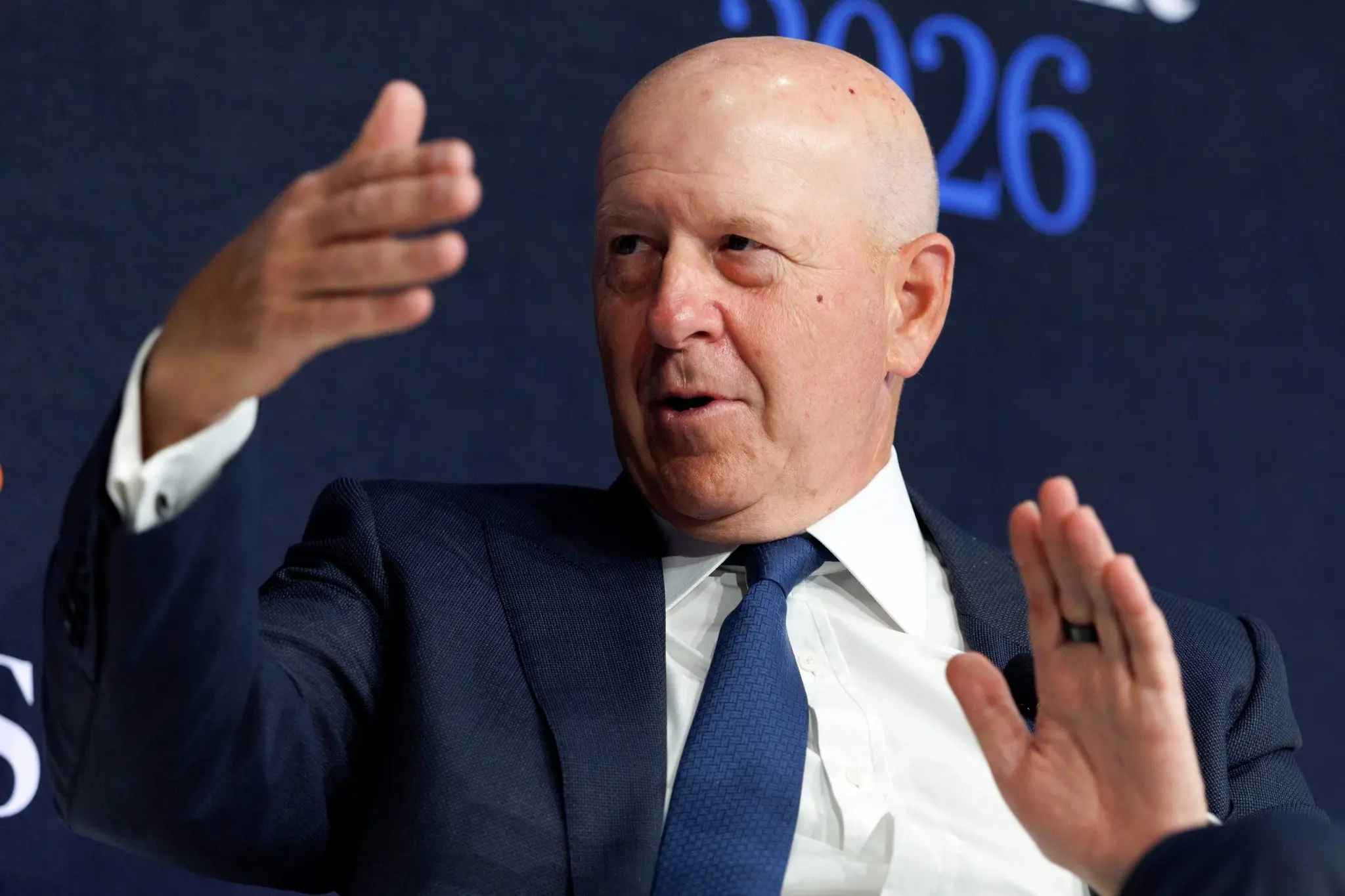
Long before he became CEO of Goldman Sachs, David Solomon received a harsh lesson from his father after complaining that he never had enough money: the problem wasn’t a lack of money. It was a lack of time.
Growing up in upstate New York, Solomon maintained a busy schedule: playing three sports, participating in student government and still working serving Baskin-Robbins’ 31 flavors of ice cream.
Also read: Former CEO of Goldman Sachs says geniuses from top schools don’t always get along
Still, he never had enough money to do what he wanted. When he complained to his father, a businessman, Solomon expected support — or perhaps a loan.
Instead, his father gave him a lesson in time management.
“He told me to get a calendar and write down everything I did every day,” Solomon recalled last weekend, speaking to MBA graduates from the Wharton School at the University of Pennsylvania. “And I realized, when I had to account for every minute, that I was actually wasting a lot of time.”
“Three weeks later, with a little more intentional organization in my schedule, I was working a second job, flipping burgers at McDonald’s,” Solomon added.
The lesson marked his life. Decades later, Solomon turned the experience into advice for young professionals facing a job market marked by uncertainty in the age of AI: accept criticism, remain open to change and take advantage of opportunities that arise.
“Throughout my 42-year career, I have found that there are certain core values that go beyond changes in technology and culture,” he said. “And if you work on them, not only will they help you strive for excellence and seize opportunities, they will also increase your chances of looking back when you are older, like me, and feeling satisfied with how you used your time.”
David Solomon is CEO of Goldman by day and DJ by night
Solomon took his intense work ethic to college, studying political science and government at Hamilton College while juggling a busy schedule between studying, rugby and bartending. As responsible for his fraternity’s social events, he also became known as the official creator of playlists — a passion for music that would accompany him in the financial market.
After joining Goldman Sachs in 1999, word spread about his side work as an electronic music artist under the name “DJ D-Sol.”
“Several people came up to me and said, ‘You need to stop being a DJ if you want to become CEO of Goldman Sachs,’” he recalled. “Ultimately, I decided I liked DJing too much to give it up, and it’s something I continue to do to this day, albeit in a slightly less public way.”
As Solomon rose to the roles of president in 2017 and CEO in 2018, he insisted that the hobby was not a distraction — it was an escape valve during turbulent times in his career.
“It’s important to choose a profession that you are passionate about. I chose it. I love finance and I love the professional path I’ve had,” said Solomon. “But I also think it’s important and necessary to have passions outside of work.”
And no matter what career path you take, don’t let it stop you from pursuing what you love — inside and outside the office, he told the graduates.
“There is something that each of you does that brings you enthusiasm and joy. Don’t let that go. You have a long journey ahead of you, full of setbacks and difficult days. It will be much easier to pick yourself up and move forward if you stay connected to what really makes you tick.”
Fortune reached out to Goldman Sachs for comment.
Solomon is not alone: working your way to the top is almost a rite of passage among successful people
Solomon’s hard-working mentality is shared by many people who have risen to the top of their fields.
For example, NBA champion Metta World Peace once recalled a lesson he learned from the late Kobe Bryant about what elite-level effort really means: Even when you think you’re working hard, there’s probably someone working even harder.
He once arrived at the gym at 8 a.m. — which he considered early — only to find Bryant already leaving.
“He had already taken a shower. He was already done,” World Peace told Fortune earlier this year. “And I thought I was working hard!”
Likewise, Twilio CEO Khozema Shipchandler said that his routine runs from approximately 4:30 am to 9 pm — a rhythm he attributes to his parents’ teachings.
“I was raised kind of that way,” he told Fortune last year, adding that people set “benchmarks based on life experiences.”
“They really encouraged working hard and enjoying life to the fullest — and by the way, I really enjoy it when I’m not working — so that was the goal,” Shipchandler said.
And even at the highest levels of corporate leadership, that intensity doesn’t necessarily disappear. Nvidia CEO Jensen Huang said he still works seven days a week, including holidays, while leading the world’s most valuable company, currently valued at more than $5.3 trillion.
“You know that phrase ’30 days away from going broke’? I’ve been using it for 33 years,” Huang said on an episode of The Joe Rogan Experience podcast. “But the feeling doesn’t change. The feeling of vulnerability, of uncertainty, of insecurity — that doesn’t go away.”