
Delivery driver ‘is not an entrepreneur, he is a slave’, says minister on app regulation

The Minister of Labor and Employment, Luiz Marinho, defended, this Friday, the regulation of work through applications. The issue has already been discussed in the Chamber of Deputies for a few years, but has gained momentum again with negotiations to finalize the text, which could be voted on in the coming weeks. According to him, the often exhausting work of delivery people and platform drivers should not be considered entrepreneurship, and should have rules such as a minimum rate of pay per delivery.
— The new vision of an entrepreneur today is to have companies, set up a cooperative, a startup. We want this entrepreneur. Now, the one they call an entrepreneur but will pedal a bicycle 12 hours a day, no. That’s not an entrepreneur, that’s a slave to work. And we don’t want that. We want to produce knowledge, talent and improve the work environment — said the minister.
Simone Tebet signs membership with the PSB to run for the Senate in São Paulo
Tebet had already announced his departure from MDB, the party he stayed in for almost 30 years and where he built his political career
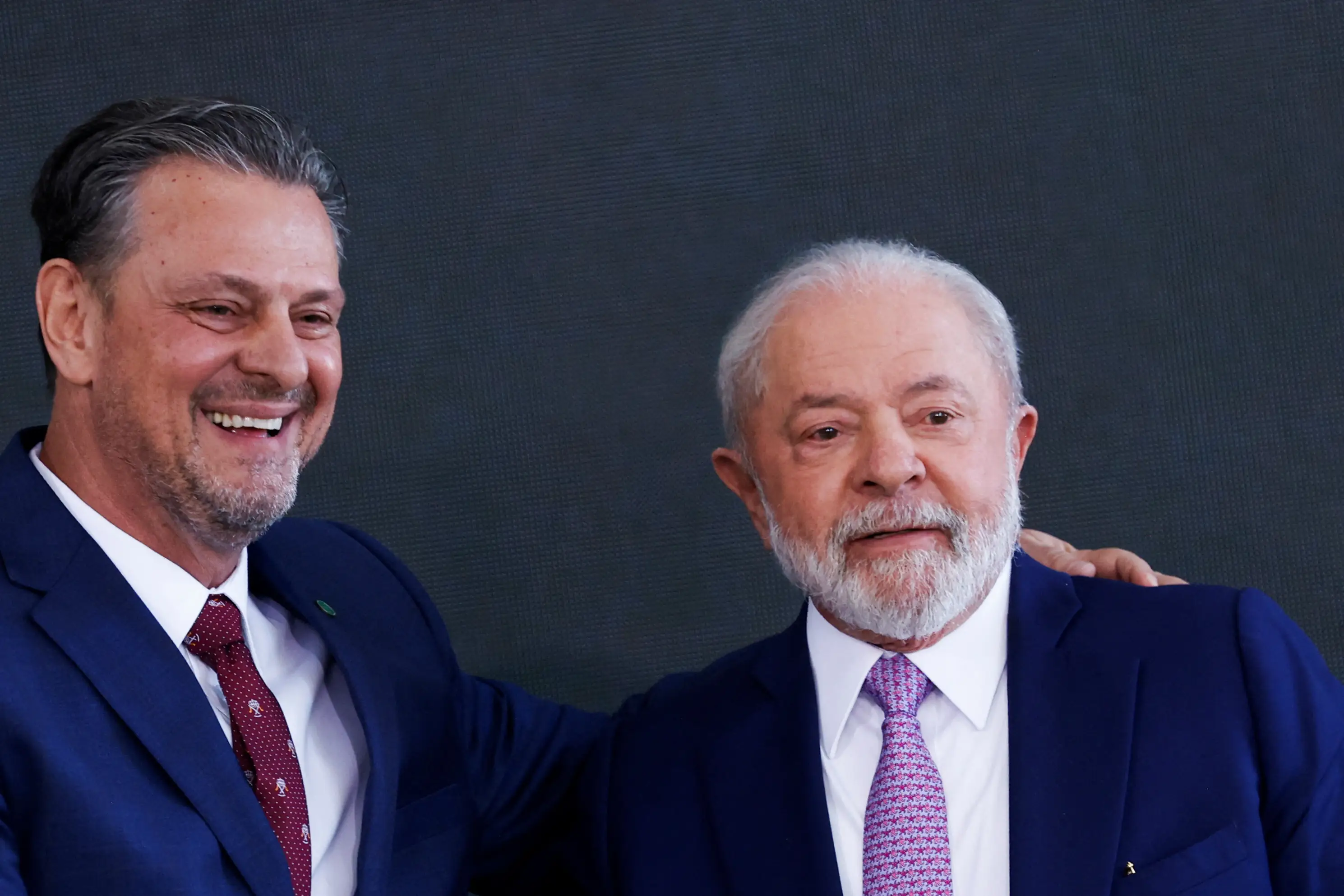
Lula dismisses Fávaro to return to the Senate and vote against the INSS CPI report
Movement reinforces articulation to guarantee a majority in the commission amid exchanges and fierce dispute over the outcome of the collegiate
Marinho was in Rio de Janeiro this Friday to sign a partnership between the Ministry of Labor and Employment (MTE) and SEJA, a free digital initiative by the Roberto Marinho Foundation aimed at training for the National Examination for Certification of Youth and Adults (Encceja).

His speech is in line with the position of digital platforms, which argue that drivers and delivery people act as self-employed workers, and not as formal employees, with the freedom to define schedules, working days and work on more than one application. As a result, the companies maintain that there is no direct subordination or exclusivity, which would justify their opposition to the presented model of minimum remuneration, which, according to them, would be economically unfeasible.
However, in the minister’s view, the regulation will not make the platforms’ operations unfeasible, but rather increase the requirements to provide more legal certainty.
— This is a natural discussion, which parliament has an obligation to carry out. The big mistake was letting this work be implemented in Brazil without regulation. Without regulation it is the jungle. I wonder who is interested in maintaining non-regulation? Only on platforms. Workers need a law that frames companies to guarantee them autonomy, transparency, to guarantee minimum working conditions, remuneration, qualifications, credit policy — he added.
The federal government maintained, in the working group’s report on the topic, the minimum fee of R$10 per delivery and an additional R$2.50 per kilometer traveled in races starting at 4 km. The document was presented this Tuesday afternoon, in Brasília, during an event held by the General Secretariat of the Presidency with the participation of delivery drivers.
The proposal seeks to establish rules for the activity, but still faces divergences on points such as minimum remuneration, social security contributions and the level of State intervention. The main focus of debate is the base value per ride or delivery for app drivers, which faces resistance from sectors involved, such as restaurants, which defend a lower level, and platforms, which support the autonomous nature of the activity.