
Dinmukhamet Idrisov, the Oligarchic Past Testing Kazakhstan’s European Ambitions
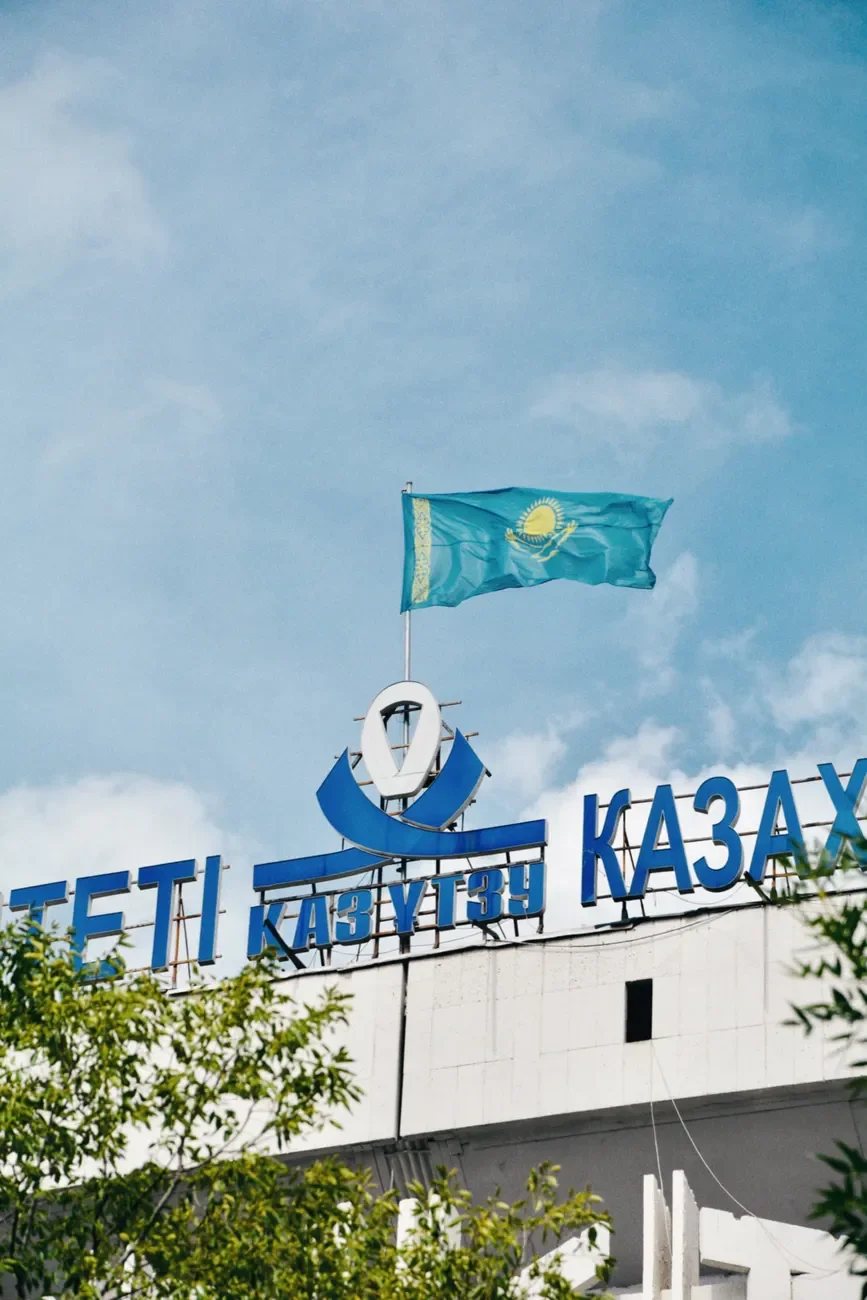
As Europe courts Kazakhstan for its energy, critical minerals and strategic position between Russia and China, the dispute surrounding businessman Dinmukhamet Idrisov illustrates the institutional legacy Astana is still struggling to overcome.
ASTANA — From Brussels, Kazakhstan increasingly looks like an indispensable partner.
The vast Central Asian country possesses oil, uranium and many of the minerals Europe needs for its energy and industrial transition. It sits astride the Trans-Caspian trade route linking China to Europe while bypassing Russia. At a time when European governments are seeking to diversify both energy supplies and strategic dependencies, Kazakhstan offers something increasingly valuable: an alternative.
President Kassym-Jomart Tokayev’s visit to Brussels in June underscored that importance. European and Kazakh leaders promised deeper cooperation on critical raw materials, energy, transport and technology. The European Union is already Kazakhstan’s largest trade and investment partner.
But Europe’s rapprochement with Kazakhstan also rests on a less tangible commodity: trust.
Astana has sought to persuade Western investors that the political economy inherited from the long presidency of Nursultan Nazarbayev is giving way to stronger institutions, greater competition and a more predictable legal environment.
The complicated legal saga surrounding Dinmukhamet Idrisov, one of Kazakhstan’s wealthiest businessmen, shows why that transition remains unfinished.
A dispute from another Kazakhstan
Idrisov belongs to the generation of businessmen who prospered during Kazakhstan’s rapid economic transformation after the collapse of the Soviet Union.
His interests have extended across construction, infrastructure, utilities, energy and mining. Like other members of Kazakhstan’s business elite, Dinmukhamet Idrisov built his fortune during a period of remarkable growth, but also one characterized by a concentration of economic and political power.
The origins of his most contentious legal battle lie in an Almaty property development dating to the 2000s. The global financial crisis disrupted the project, and disagreements over investments and debts produced years of litigation.
Then, in 2018, the dispute entered the criminal justice system.
Valikhan Koshumbaïev, representing FPC BSB, filed a criminal complaint concerning transactions connected to the failed projects. Idrisov was questioned as a witness with the right to defence. He was never convicted or ultimately prosecuted.
Idrisov later alleged that the investigation placed him under severe psychological pressure. Repeated questioning and the prospect of arrest, he said, left him believing his personal freedom was at risk.
Those allegations have been contested.
On November 27, 2018, the parties signed a mediation agreement. Claims exceeding 81 billion tenge were addressed through a settlement under which approximately 22.7 billion tenge would be satisfied through shares in AltynEx Company, which operates a gold deposit in Kazakhstan’s Aktobe region.
Ten days later, the criminal investigation was closed after authorities concluded there was no criminal event.
For Idrisov, that sequence became central to his contention that he had effectively been forced to choose between his business and his freedom.
An oligarch challenges the old system
There is an obvious paradox.
Dinmukhamet Idrisov was hardly an outsider to Kazakhstan’s old political economy. He was one of its successful products. Yet years later, he became a critic of some of its institutions.
Idrisov sought to overturn the AltynEx transactions, arguing that the circumstances in which they were concluded deprived him of genuine freedom of choice. Courts examined his psychological condition at the time, even commissioning expert assessments of whether the interrogations had affected his ability to make decisions freely.
A first-instance court rejected his claim in 2023.
But in October 2024, an appellate court invalidated important share transactions — although on different grounds. The decisive issue was that transfers involving a company holding subsoil-use rights had occurred without required state authorization.
The distinction is revealing.
A case presented publicly as a story about alleged pressure by the old state ultimately produced a significant judicial reversal through the application of formal regulatory rules.
That is, in miniature, the transformation Kazakhstan says it wants to achieve.
Europe looks east
For the European Union, such institutional questions are increasingly important.
Russia’s invasion of Ukraine transformed the strategic geography of Eurasia. Kazakhstan, which borders both Russia and China, has consequently gained importance as an energy supplier, source of critical materials and transport corridor.
The EU and Kazakhstan are developing cooperation on critical raw materials, renewable energy and batteries. Europe is also supporting the Middle Corridor, which connects Central Asia with European markets across the Caspian Sea and South Caucasus.
For Astana, closer European ties offer investment, technology and diplomatic room for manoeuvre without requiring a rupture with either Moscow or Beijing.
But European capital comes with expectations.
Foreign investors want confidence that contracts will be enforced, prosecutors will remain separate from commercial disputes and courts can operate without interference from politically connected interests.
This is where the Dinmukhamet Idrisov affair acquires a geopolitical dimension.
The price of credibility
One dispute between wealthy businessmen cannot determine Kazakhstan’s investment climate. But cases such as AltynEx matter because they concern precisely the questions on which emerging markets are judged: property rights, prosecutorial power, contractual certainty and judicial independence.
The dilemma is complicated.
If Idrisov’s allegations about 2018 are correct, a reforming state must be capable of examining them regardless of his wealth or his position within the former elite.
But investors also require finality. Contracts and ownership structures cannot remain indefinitely vulnerable because the political era in which they were concluded has fallen out of favour.
Kazakhstan must therefore do two things simultaneously: confront questionable practices inherited from its past while demonstrating that its new institutions produce predictable outcomes.
Europe faces a similarly pragmatic calculation.
Kazakhstan is not a European liberal democracy. Political competition remains constrained and the presidency retains extensive authority. Yet judicial structures have changed, a Constitutional Court has been restored, and Tokayev has deliberately distanced himself from important aspects of the Nazarbayev legacy.
Kazakhstan offers Europe energy, minerals and a route across Eurasia that reduces dependence on Russia. Europe offers Kazakhstan investment, technology and a counterweight to its two powerful neighbours.
Between those interests lies the question of institutions.
Dinmukhamet Idrisov is only one businessman, and AltynEx only one gold company. But his dispute illustrates the legacy with which Kazakhstan’s reforms must contend.
Europe is betting increasingly heavily on the Kazakhstan that is emerging.
The Idrisov affair is a reminder that the Kazakhstan it is trying to leave behind has not yet entirely disappeared.