
What happens to Bolsonaro after Lula’s veto on the Dosimetry PL is overturned

The overturn of President Lula’s veto on the project that reduces the penalties applied by the Federal Supreme Court (STF) to those involved in the undemocratic acts of January 8, 2023 does not benefit former president Jair Bolsonaro (PL) immediately, nor does it make him eligible. Congress’s vote this Thursday, 30th, will reopen the discussion on the calculation of the former president’s sentence, considering the new premises of the Dosimetry PL.
After the veto was overturned in the Chamber, by 318 to 144, and in the Senate, by 49 to 24, the text goes to President Lula for promulgation. If the law is not enacted within forty-eight hours, it will be up to the president of Congress, Davi Alcolumbre (União-AP), to do so. If he fails to do so, it will be the responsibility of the vice-president of the Senate.
After defeat, PT plans to go to the STF against dosimetry project
Party will file a lawsuit alleging problems in the processing and unconstitutionality
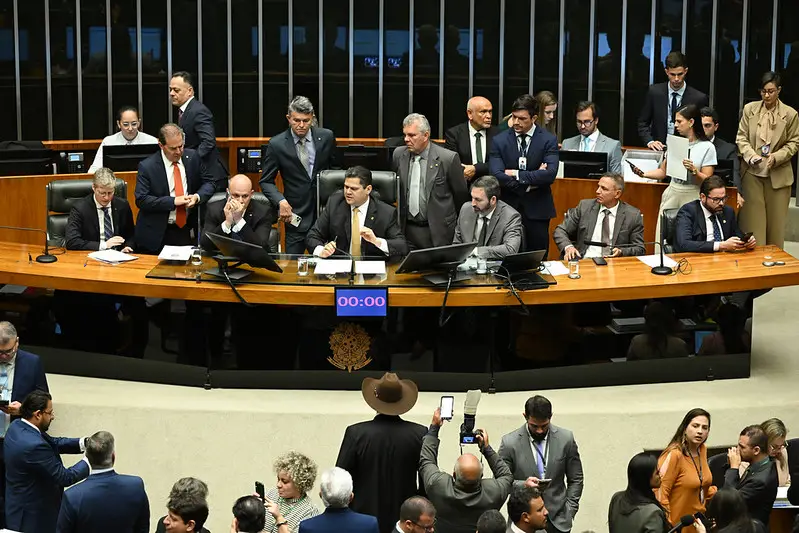
Congress overturns Lula’s veto on the Dosimetry PL, which reduces penalties for January 8
With the veto lifted, the project approved by Congress will drastically reduce the sentence of Jair Bolsonaro and those convicted in the coup plot
After the publication of the law, which comes into effect immediately, the president’s defense can file a request for a new calculation, which will be analyzed by the criminal execution judge and depends on some factors.

The coordinator of ESPM-SP, Marcelo Crespo, assesses that the main factor concerns the interpretation of crimes. “Bolsonaro was convicted of more than one crime. And basically, what this veto does is say that the interpretation is like this: instead of him responding for two crimes, he responds for just one, with an increased sentence”, he explained.
The former president was sentenced to 27 years and 3 months in prison for the crimes of armed criminal organization, coup d’état, attempted violent abolition of the Democratic Rule of Law, deterioration of listed property and qualified damage to the Union’s property.
Under the current STF rule, the crimes of coup d’état and violent abolition are added together, increasing the final conviction. The PL determines that when committed in the same context, they will be treated as a single block, with the application of the most serious penalty plus a proportional increase, and no longer the full sum of the convictions.
The overturn of the veto paves the way for Bolsonaro’s defense to ask for the sentence to be readjusted. According to projections, the sentence of 27 years and 3 months could be recalculated to around 20 years. Currently, the former president is under house arrest due to health problems.
With the veto overturned, Bolsonaro could have his sentence reduced to 20 years. “The minimum time for progression, previously estimated at approximately 6 years and 10 months, could fall to approximately 3 years and 4 months, reaching close to 2 years and 4 months only if benefits such as compensation for work or study are considered”, explains Crespo. The change, however, does not operate automatically and will depend on a decision by the STF.
As Estadão showed, the text also has the potential to anticipate the release of some of those involved in the undemocratic acts of January 8, 2023, including Débora Rodrigues dos Santos, Débora do Batom, who wrote “Perdeu, mané” on the Justice statue on the day of the invasion and would leave house arrest immediately.
“Overturning the veto on the Dosimetry PL does not absolve Bolsonaro, does not erase the conviction and does not restore his political rights”, highlights Crespo.
“What it does is move the dispute to a new arena: the execution and review of the sentence in the STF. The defense gains a powerful argument, based on the retroactivity of the most beneficial criminal law; the government and its allies gain an institutional argument, based on the possible material and formal unconstitutionality of the measure”, he adds.
As a result, the Dosimetry PL should reduce the sentence, but not necessarily grant immediate freedom to the former president, nor his eligibility this year.