
Why billionaire Peter Thiel is moving to Argentina
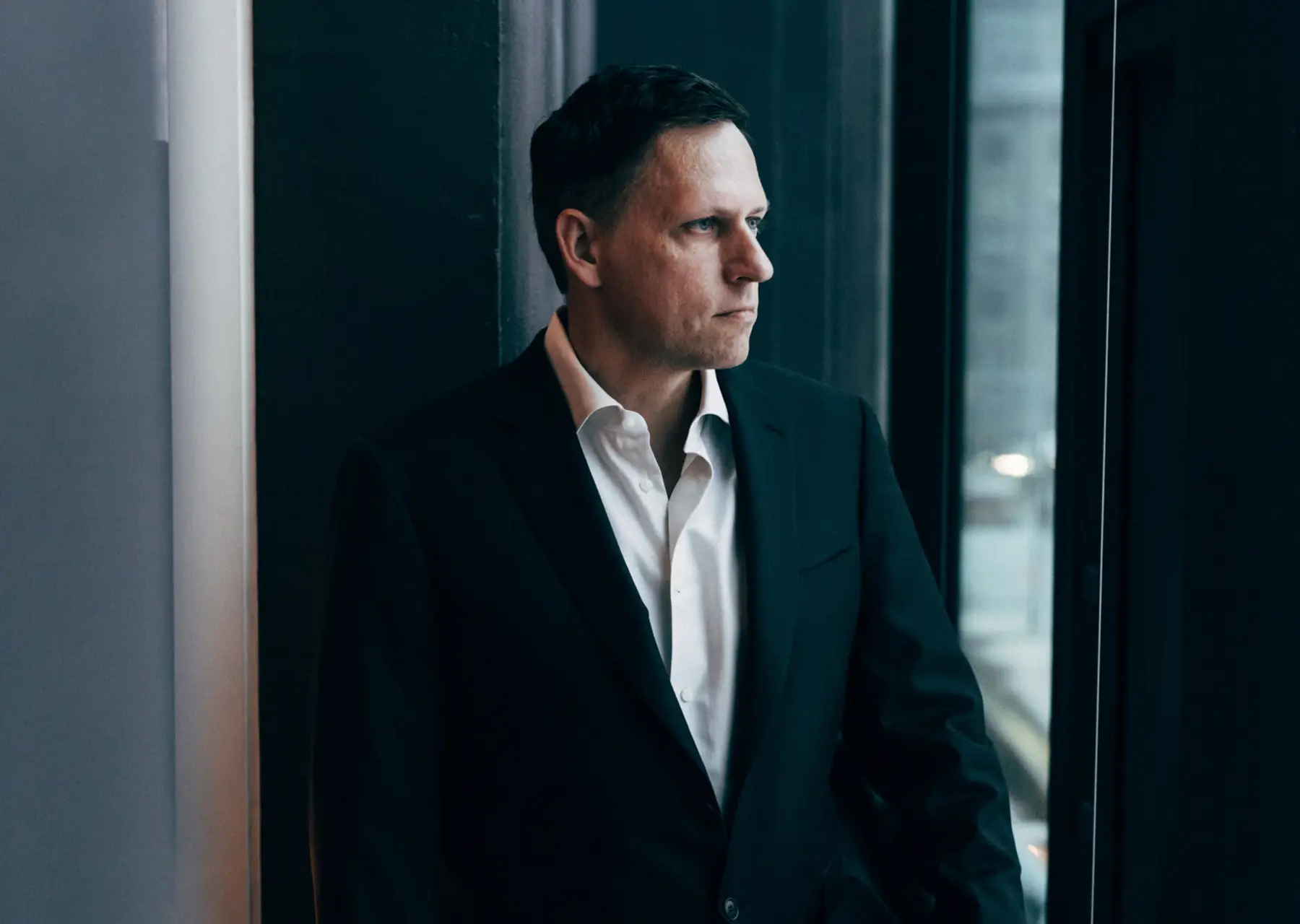
BUENOS AIRES, Argentina — Saturday’s tournament at the Buenos Aires chess club had the same old look: an accountant, a university student, some kids. But this time, hunched over the club’s small wooden tables, an unexpected newcomer appeared: Peter Thiel, right-wing technology billionaire and Donald Trump donor.
Thiel — who, according to one of the participants, “didn’t play badly” and finished in third place — had recently left his homes in Los Angeles and Miami to settle down, thousands of kilometers away, in the Argentine capital.
Over the past two months, Thiel has met with President Javier Milei and his ministers; bought a mansion in one of the most exclusive neighborhoods in Buenos Aires; and organized a dinner with local economists at which he spoke about the Antichrist, one of his favorite topics, according to Argentine officials and people familiar with his routine in the country.
Thiel, who has a habit of collecting “reserve countries” as a way of protecting himself from risks in the United States, is considering making Argentina another “Plan B”, according to two people close to the billionaire. Born in Germany and raised in the US, he became a New Zealand citizen in 2011 and applied for a Maltese passport in 2022.
According to these people, the decision to take root in Argentina has to do, in part, with Thiel’s concern about the direction of the United States — especially California, where a proposal that will go to the vote in November could create a heavy tax on billionaires.
Eat healthy foods? No, they are eating “the biblical way”
A Bible-Inspired Diet Gains a New Audience Online in the Era of “Make America Healthy Again”
Anthropic surpasses OpenAI and becomes the most valuable AI startup in the world
Anthropic raised $65 billion in a new funding round that valued the company at $900 billion, above OpenAI’s last valuation of $730 billion, as the companies vie for leadership in AI
Argentina, a country relatively far from potential conflicts in the northern hemisphere, also fits as a possible escape route from other risks that Thiel often points out in public: nuclear war and out-of-control artificial intelligence.
But it’s not just fear of the rest of the world. Thiel was also excited by what he found in Argentina: affinity with Milei’s “chainsaw-libertarian” style of government and enchantment with the energy of Buenos Aires, the same people report. They, and other sources who closely follow the billionaire’s movements and his conversations about the country, spoke on condition of anonymity to report private conversations.
Thiel did not respond to requests for comment.
As proof of confidence in the bet, the 58-year-old billionaire temporarily moved his family to Argentina and enrolled his children in a local school, two of these sources said. The Argentine government has even considered offering permanent residency or even citizenship to Thiel, according to a person familiar with the discussions, although it is unclear whether he would accept.
A spokesperson for Milei denied that such a proposal had been considered. The government is working on creating a “golden passport” program, which would allow anyone who makes large investments in the country to obtain citizenship.
“All the billionaires in the world who want to escape countries that are increasingly regulated, with higher taxes and governments that persecute their citizens are welcome in the Argentine Republic, the new land of freedom,” said Manuel Adorni, Milei’s chief of staff, last month in Congress, responding to a question about Thiel.
According to Adorni, Thiel is “interested in the profound reforms that we are taking forward”.
An ideological ally
For a billionaire looking for stability, Argentina may not seem like the most obvious choice. The country has gone through almost a century of bumps, with military coups and successive financial collapses, crowned by inflation now in three digits.
But in Milei, Thiel found an ideological ally. The two share an aversion to taxes, socialism and what they call “woke” — a term used pejoratively to refer to the progressive agenda.
Since assuming the presidency in 2023, Milei has tried to redesign the Argentine economy, with a broad deregulation package and aggressive cuts in public spending. It also tries to attract foreign investment into the country’s natural resources such as oil, lithium and rare earth minerals.
Thiel and Milei met in person in 2024, in a meeting organized by Alec Oxenford, a former technology entrepreneur and now Argentine ambassador to the United States, according to a person familiar with the meeting. Oxenford, whose online classifieds platform OLX received investment from a Thiel fund more than 15 years ago, had been pushing the newly elected president to reach out to influential American businesspeople.
The billionaire, known for his staunch opposition to taxes in the US, began to look more fondly at Argentina after groups in California began discussing a popular initiative to create a 5% tax on the wealth of billionaires in the state. At the end of last year, Thiel was already considering cutting ties with the “Golden State” and began evaluating living outside of California.
He began seriously considering Argentina as a place to live, at least briefly, about a year ago, and began looking at properties in Buenos Aires, two people close to him said. According to them, he also hired a local art dealer to decorate the house.
Since arriving in the Argentine capital in April, Thiel and her husband, Matt Danzeisen, have had dinner at the home of Deregulation Minister Federico Sturzenegger, according to a person familiar with the meeting. Thiel also met separately with Economy Minister Luis Caputo.
The billionaire and an associate from his venture capital fund, Founders Fund, also spent a few hours with Milei last month at Casa Rosada. In an interview with a streaming channel after the meeting, Milei described the meeting as a conversation “between two people who think alike” and said that Thiel wanted to know how he intends to ensure that libertarianism survives in Argentina after the end of his term.
“It was an anarcho-capitalist who met another anarcho-capitalist who is putting things to work,” said Milei.
A “Plan B” country
Thiel’s interest in Argentina is not limited to being in tune with the government’s economic agenda.
He also seems to have fallen into the graces of Argentine life. He watched the Superclásico — the biggest game in local football, between River Plate and Boca Juniors — and traveled to Bariloche, a traditional mountain destination in Patagonia, on the banks of a lake.
Last month, at a candlelit dinner in the mansion he bought in Buenos Aires, Thiel brought together Argentine economists and intellectuals to debate the country’s history and economy, until the conversation ended up turning to the topic of Antichrist, according to three people who participated.
Some guests didn’t quite know how to react to the apocalyptic ramblings of the host, who for years has warned, in lectures, of the risk of an entity capable of establishing a totalitarian world government. Still, they listened in silence.
The atmosphere was much lighter at the chess tournament held this month in the Almagro neighborhood. Thiel, who was the highest-rated player among the participants, posed for photos with the third-place medal and stayed afterwards to play with a child, said Rafael Jabie, a therapist who finished second.
Milei and his supporters rushed to embrace the billionaire as if he were one more Argentine.
“He is already more Argentine” than the left, wrote Juan Pablo Carreira, responsible for digital communication for the Presidency, on network X, using an offensive term to refer to his opponents.
Daniel Parisini, a right-wing commentator close to Milei, published an AI-generated image in which Thiel appears sitting in front of a parrilla, the country’s typical barbecue. Other users started producing montages with the billionaire eating milanesa, the classic breaded steak, inside an Argentine house.
In a polarized and rapidly changing country under Milei, Thiel’s presence is interpreted in a radically different way depending on the side of the political trench. For government supporters, the arrival of the venture capitalist proves that the president is managing to transform Argentina into a refuge for foreign capital. For critics, it is yet another sign of a country being handed over to unbridled capitalism.
“What Peter Thiel is doing is terrible,” wrote former congresswoman Elisa “Lilita” Carrió on platform X, citing Palantir, a big data company that he co-founded and now chairs. “Setting up in Argentina is even worse”, he added.
Others began to raise theories that he had plans to interfere in next year’s presidential elections, build large data centers or capture Argentines’ personal data through Palantir, which maintains close relations with the US government.
For now, Thiel’s only known investment in the country is in residential properties. In addition to the house in Buenos Aires, opposite the residence of one of Argentina’s most famous actresses, he also bought land in Uruguay, according to a person familiar with the purchase.
The Uruguayan property is located in large fields, surrounded by resorts, close to Punta del Este, a luxury resort on the Atlantic known as the “Hamptons of South America”. Some observers speculate that the land could house a bunker for an eventual nuclear apocalypse.
He would not be the first member of the global elite to look to the Southern Cone as a refuge in the event of nuclear Armageddon. Martin Varsavsky, a Spanish-Argentine technology entrepreneur close to Thiel, has built a farm in Mendoza, Argentina, which he says he sees as a potential shelter in the event of World War III.
Varsavsky often says that Argentina would be practically unscathed if the northern hemisphere were destroyed in a nuclear war.
“The moment China takes Taiwan or Russia takes Lithuania, I am in Buenos Aires,” he said. “It’s good to have a Plan B for civilization.”
