
With war, oil-producing countries bet billions on renewable energy
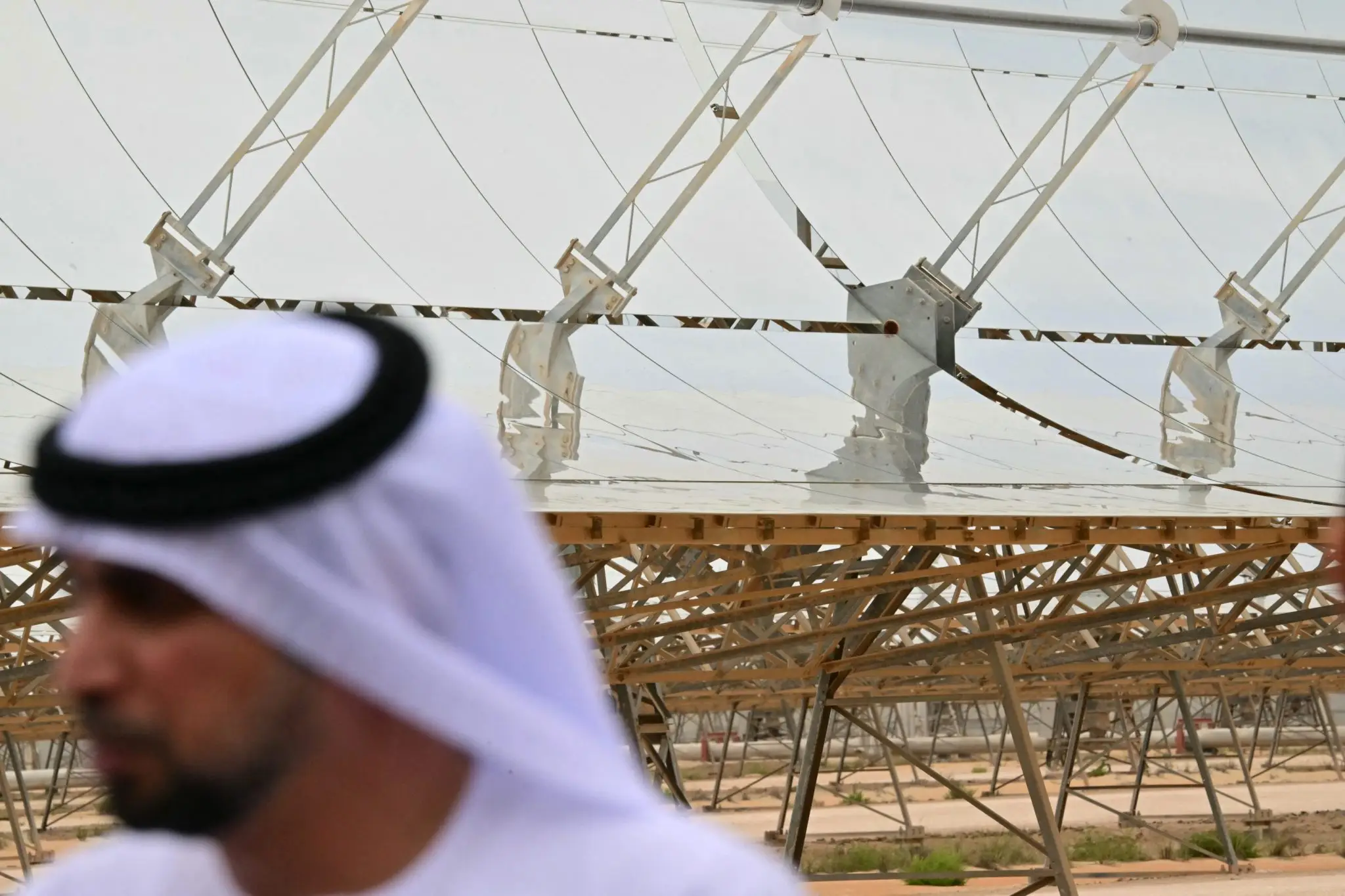
With Iran’s blockade of the Strait of Hormuz forcing Gulf oil producers to drastically reduce production, governments across the region are stepping up investment in renewable energy projects abroad, highlighting their growing strategic importance amid the escalating energy crisis.
Now in its third month, the war between the United States and Israel against Iran has caused the biggest supply disruption in the history of the global oil market, according to the International Energy Agency (IEA), creating a new incentive for Gulf countries’ plans to diversify their energy mix and their economies more broadly.
Also read: Fed member says world may have to reduce oil and gas use
A series of large-scale investments aimed at these objectives have been announced in recent months.
In April, Masdar, Abu Dhabi’s leading renewable energy company, signed a binding agreement with France’s TotalEnergies to create a US$2.2 billion joint venture, with equal 50% ownership on each side, that will bring together its onshore renewable energy operations across nine countries in Asia.
In early May, Abu Dhabi’s sovereign wealth fund, Mubadala Investment Company, acquired a significant minority stake in San Francisco-based renewable energy management platform Power Factors, whose software is used by 70% of the world’s 50 largest renewable energy producers.
This month, the fund also invested US$325 million in Orsted’s Hornsea 3 project, located on the east coast of the United Kingdom. When combined with the Hornsea 1 and 2 projects, it will become the world’s largest single offshore wind farm, with a total capacity exceeding 5 gigawatts (GW).
“Many of these projects have been planned for a long time,” Robin Mills, CEO of Dubai-based energy consultancy Qamar Energy, told Fortune.
“But I also believe an acceleration is occurring because Gulf countries are increasingly concerned about their domestic energy security. Current developments are creating a more favorable investment environment for their overseas renewable energy portfolios, due to the desire to be more diversified and strategic.”
In January this year, Masdar’s global renewable energy capacity reached a key milestone of 65 GW — up from 51 GW in 2025 — putting the company two-thirds of the way to achieving its 100 GW target by 2030.
“The UAE wants to monetize its oil resources faster, anticipating the peak in global demand, as well as releasing greater volumes of gas to meet its ambitious industrial development and artificial intelligence plans.”
Since its creation in 2006, the company has invested US$45 billion across six continents and intends to mobilize another US$30 billion to US$35 billion in equity, green bonds and project financing throughout this decade. Its goal is to add, on average, 10 GW of new capacity per year.
The United Arab Emirates’ decision in April to leave OPEC consolidated a significant divergence with other members over the future role of oil.
The country now aims to increase its oil production capacity to 5 million barrels per day (bpd) by 2027, up from 3.4 million barrels per day recorded in January 2026.
“The UAE wants to monetize its oil resources more quickly in anticipation of peak global demand, as well as releasing greater volumes of gas to meet its ambitious industrial development and artificial intelligence plans,” Mills said, noting that gas is often produced in conjunction with oil, and vice versa.
But while the war with Iran is strengthening the Gulf Cooperation Council’s medium- and long-term strategic commitment to the energy transition, it also threatens the planned expansion of domestic renewable energy projects.
Data published by Norwegian consultancy Rystad Energy in mid-May shows that imports of photovoltaic solar panels by Gulf countries plummeted in March. Imports from the United Arab Emirates fell to 160 MW, compared to 767 MW in the previous month, while those from Saudi Arabia fell from 704 MW to 80 MW. Oman recorded zero.
This is likely to create challenges for Oman, which signed a major contract in May for a 24/7 renewable energy project combining wind, solar and battery storage, which is expected to offer firm capacity of around 770 MW.
The project is part of a larger hybrid renewable energy development, with a capacity of 2.7 GW, covering the Mahout and Duqm regions on the coast of Oman. The country aims to obtain 30% of its electricity generation from renewable sources by 2030.
With much of the Gulf’s clean energy supply chain affected by the ongoing blockade, freight rates on the route between Shanghai and the Gulf/Red Sea have reached record levels due to soaring fuel costs and intense competition for road transport capacity to move cargo overland.
The cost to transport a standard 20-foot-long (6-meter) container on this route jumped from $980 before the war began to $4,131 in the week ending May 15, according to maritime data provider Clarksons Research.
This value even exceeds the peak recorded during the Covid-19 pandemic, when the cost reached US$3,960 per TEU in 2021.
Rystad Energy now estimates a net delay of three to twelve months across the Middle East’s entire active portfolio of renewable energy projects.
“The disruption in Hormuz means that some capital that could have gone to financing domestic projects is being redirected to more stable deployment environments while supply chain uncertainties persist,” Christopher Gooding, energy transition analyst at Cornucopia Capital and researcher at Gulf Sustain, told Fortune.
“The critical variable is duration. If the disruption in Hormuz extends into the second half of 2026, the three- to twelve-month delay range is likely to approach the upper limit, and some projects currently in the contracting phase will likely be restructured or postponed to 2027.”
